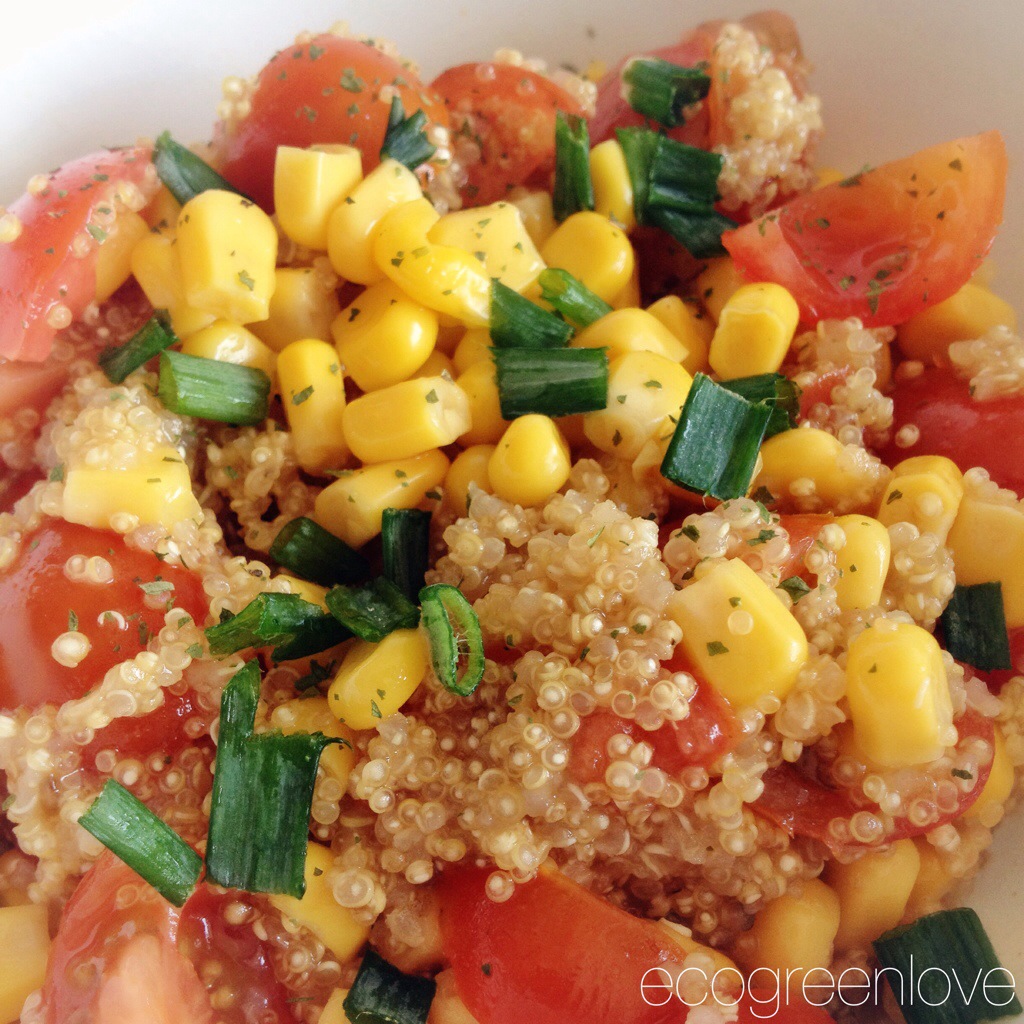
Quinoa with tomatoes, lemon, chives and sweet corn.
Perfect for summer. Enjoy!
Tag: Salad
15 Tricks to Save Money on Food But Still Eat Well via @eatingwell


Tips to help you save money at the grocery store while eating healthy.
Being prepared before heading to the store is the best way to make sure you stick to your grocery shopping budget. But there are also some strategies to keep in mind and ingredients to keep an eye out for at the store. Here are some of our favorite ways to save while shopping.
1. Skip The Prepackaged Salad Mix
Sure, bagged salad mixes are convenient. And anything that makes it easier to eat your veggies is a good thing. But they’re also expensive and can quickly go from perky to wilted to downright slimy. So try buying heads of lettuce (which often last longer in your crisper) and make your own mixes. Try mixing up romaine, radicchio, red leaf and/or escarole.
2. Grow Your Own
Another option for salad greens is to grow your own—they don’t take up much space and they grow quickly. For about the cost of a bag of salad greens ($3) you can buy a packet of seeds for mixed salad greens. The packets have 500 seeds and will plant a 30-foot long row of greens. (We’re not sure exactly how many salads that translates into, but it’s safe to say you’ll be swimming in salads for weeks.)
3. Buy Spices From The Bulk Bins
Spices are one of the keys to keeping food both healthy and delicious, because when you use bold flavors you don’t need as much fat. Look for a store that carries spices in bulk—the price per ounce is often less expensive. Plus you can buy a smaller amount, which helps you save in two ways: The up-front price is less. But perhaps more important, spices have a shelf life. After a year or two in your cupboard they just don’t have as much flavor. So when you buy smaller amounts, you’re less likely to have old spices sitting around that are ready for the trash can—a serious waste of money.
Continue reading “15 Tricks to Save Money on Food But Still Eat Well via @eatingwell”
The 10 easiest fruit and vegetables to grow via @changebehaviour


Fancy creating your own supply of juicy fruits, crunchy vegetables and fresh salad greens? This selection of great foods sprout more-or-less like magic out of the ground—with the minimum of effort. Whether you’ve only a windowsill, garden or balcony, get planting today. Here are ten of the easiest fruit and veg you can grow, with step-by-step instructions from the experts at Garden Organic.
Salad

Lettuce, rocket and other crunchy leaves are easy to grow. Cut them and they keep coming back!
- Super-easy to grow indoors all year around
- Constant harvest – leaves can be picked over and again and they’ll grow back
- Pick’n’ mix your favourite flavours, textures and varieties – peppery rocket, crunchy lettuce, exotic oriental saladini
Complete growing directions
- You can grow salad all year inside. Try mixing different lettuces or adding rocket. Oriental varieties work best for winter use – sow in September and they’ll last you until March.
- Fill a seed tray with compost.
- Toss over about a quarter of a teaspoon of salad seeds.
- Cover with a sprinkling of compost, water it carefully and place it on a sunny windowsill.
- Don’t let it dry out.
- Hint: Try stretching cling film over the top of the tray to keep moisture in. Take it off as soon as seedlings start to appear.
- When the plants are about 3in tall you can start cutting them and they’ll keep growing back again and again.
Alternative method: you can grow salad in 12 inch pot or directly in the soil in your garden.
Watering
- The easiest way to tell if something needs watering is with your finger: poke it into the soil to test.
- If the soil is damp just under the surface, don’t water. If it is dry up to the first crease of your finger then you need to water.
- Seeds and seedlings need care when watering – use a fine-head watering can so you don’t over-water them.
- It is better to water well infrequently than to sprinkle a little every day.
Continue reading “The 10 easiest fruit and vegetables to grow via @changebehaviour”
Why Compost and What to Compost? via @recycle_now
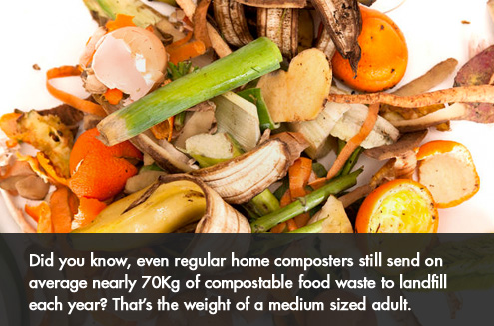
Why compost?
Composting is an inexpensive, natural process that transforms your kitchen and garden waste into a valuable and nutrient rich food for your garden. It’s easy to make and use.
“Just like you I am keen to do my bit for the environment and at the same time help my garden. All you need to do is follow the advice on this website and you too can get the best out of your bin and start giving Mother Nature a helping hand”
– Philippa Forrester
Continue reading “Why Compost and What to Compost? via @recycle_now”
How to Wash, Dry, and Store Lettuce
So this is how I wash, dry and store my lettuce so that it is fresh and ready for salad whenever I need it! I use this method for all types of lettuce (except iceberg, see the end of this post for information about cleaning and storing iceberg lettuce) and it also works for other types of greens and hearty herbs such as parsley.
1. Fill a sink* with cold water, separate all the leaves of lettuce, place them in the water and swirl them around. If the lettuce is a bit limp, let it soak in the water for 30 minutes and it will miraculously come back to life.
2. Drain the water, turn on the faucet, and briefly rinse* each piece of lettuce as you remove it from sink and place in the basket of your salad spinner. If you use organic lettuce, just give each piece a quick once-over to check for clinging bugs and dirt. As you put the lettuce in the spinner, you can tear the leaves in half if they are large (such as full-size romaine).
3. When the spinner is full but not tightly packed, spin the lettuce until dry.
4. Spread two paper towels (still connected) on the counter and pile the dry lettuce in the middle. Wrap the paper towels around the lettuce and slide into a gallon-size zippered plastic bag. Squeeze the air out and close the bag.
5. The lettuce can now be stored in the fridge and should stay fresh for at least a couple of weeks. You can take out what you need whenever you want to make a salad or sandwich and then just reseal the bag. The plastic bags can also be reused!

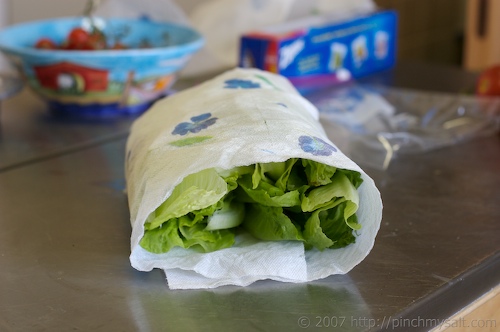


*My advice would be: instead of filling the sink with cold water and then draining it afterwards, why not filling a big bowl and then reuse it watering the plants, and when is time to rinse each leaf directly with the water running from the faucet, let the water run into the bowl (the same or another) in order to not wasting water and reusing it for something else, as I said, watering the plants may be a good option.
Find the full original article here, gives a lot of other tips including salad additions and dressings, totally worth it.
 ecogreenlove