
![Solutions to Plastic Pollution [Visuals] | ecogreenlove](https://ecogreenlove.com/wp-content/uploads/2023/06/06052023_plasticpollution.jpg?w=1024)
The 2023 World Environment Day campaign #BeatPlasticPollution calls for global solutions to combat plastic pollution. Join us for the 2023 #WorldEnvironmentDay celebrations because we can Beat Plastic Pollution!
World Environment Day 2023 is a reminder that people’s actions on plastic pollution matters. The steps governments and businesses are taking to tackle plastic pollution are the consequence of this action.
It is time to accelerate this action and transition to a circular economy. It is time to #BeatPlasticPollution.
We produce around 430 million tonnes of plastic a year, two-thirds of which are short-lived products which soon become waste. Plastic pollution can have devastating impacts on our ecosystems and wildlife, our health and well-being and the global economy.
Why is plastic so popular?
It is not surprising that plastic is so commonplace: it is relatively cheap to produce, durable, flexible and easy to transport. Made from fossil fuels, it began to be mass-produced during the Second World War. As fossil fuel extraction fed plastic production, everything from household appliances to medical devices were produced using plastic. Plastic production has surged over the past 50 years and is expected to double over the next 20 years. If no action is taken plastic pollution is set to triple by 2060. For this reason, it is important to transition to a healthier, more economically viable circular economy as soon as possible.
What is the life-cycle approach?
The plastic pollution crisis stems mainly from the fact that plastic is currently produced, used (often just once) and discarded. Tackling plastic pollution requires an approach that addresses all stages of plastic’s life cycle, from production to consumption to waste management, reducing pollution and waste at each stage. A life-cycle approach also helps balance economic needs with concerns over the effects of plastic pollution.
How can we solve the plastic crisis?

Individuals
Individual actions underpin the systemic change required to transition to a less plastic-dependent economy. Each of us can use our voice and choices to drive change. Here are some of the things you can do.
Non-Government Organizations, faith organizations and community groups
NGOs, faith organizations and community groups are a powerful source of change in the world. Here is how they can help to tackle plastic pollution.
Science and education organizations
The scientific community and academia can exercise their influence and knowledge to combat plastic pollution. Here are some things they can do.
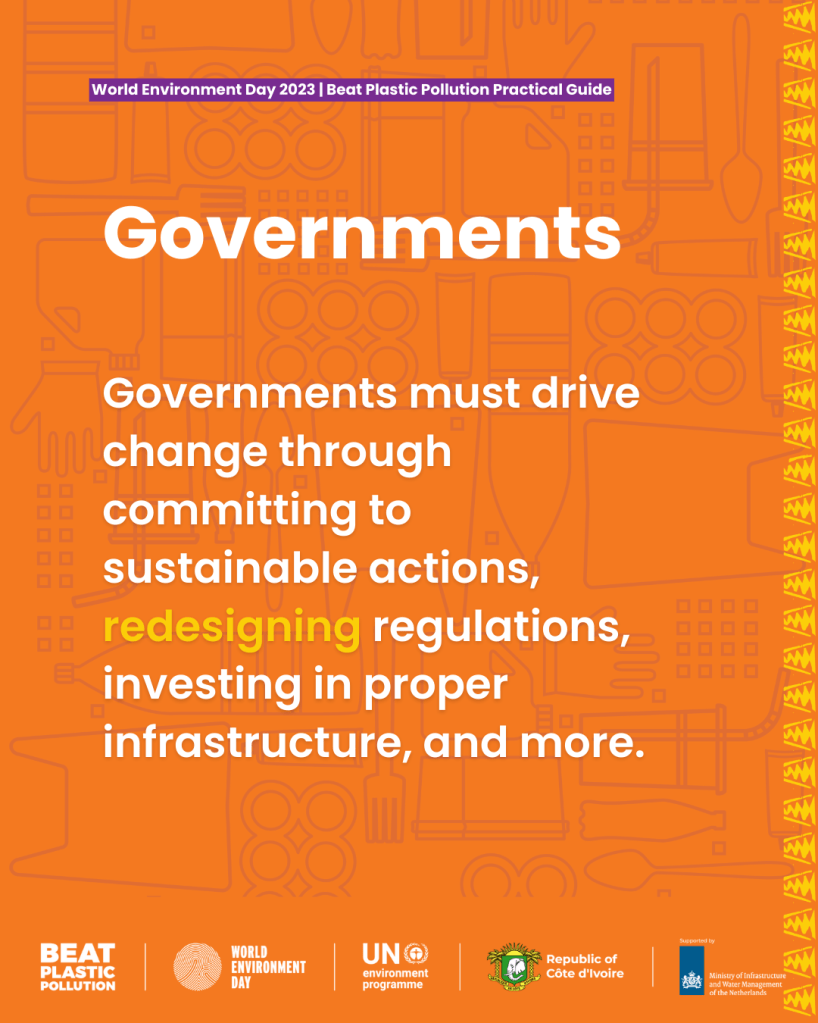
Governments
Legislation is vital to tackling the plastics crisis. While solutions must engage every sector, governments need to drive change. Here are some ways governments can catalyze change on a global, regional and local scale.
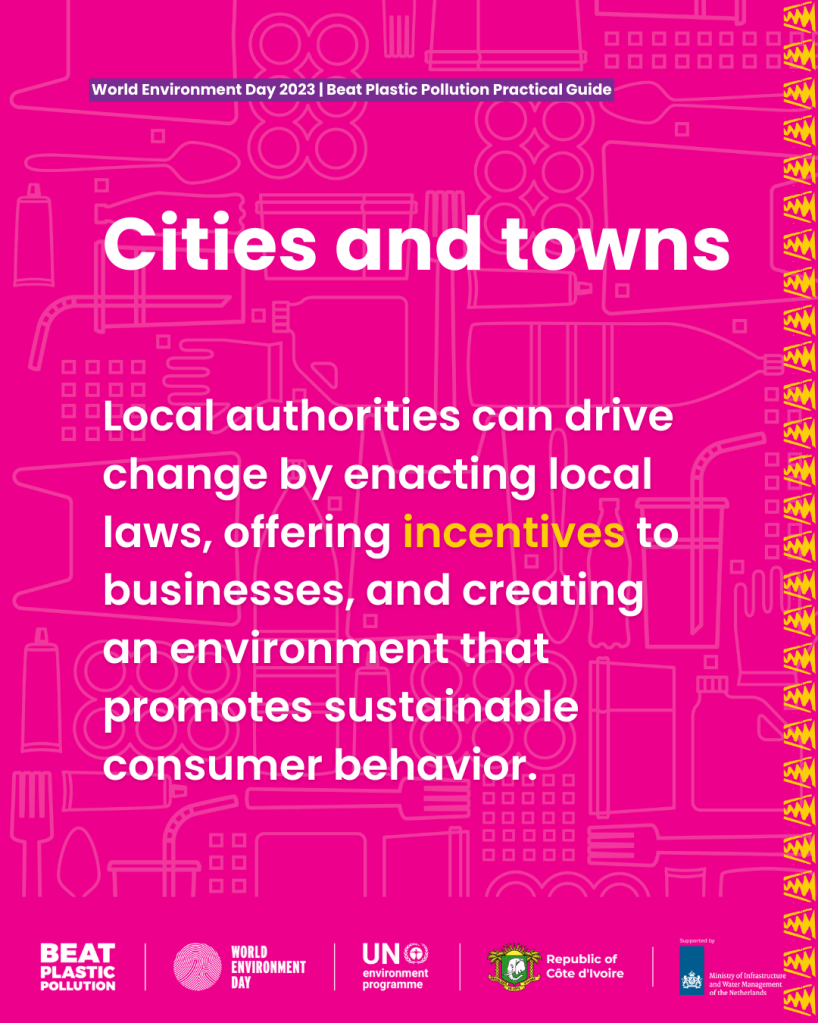
Cities, towns and local authorities
Cities, towns and local authorities can drive change by introducing local laws, supporting businesses and encouraging sustainable consumer behaviour through advocacy campaigns.
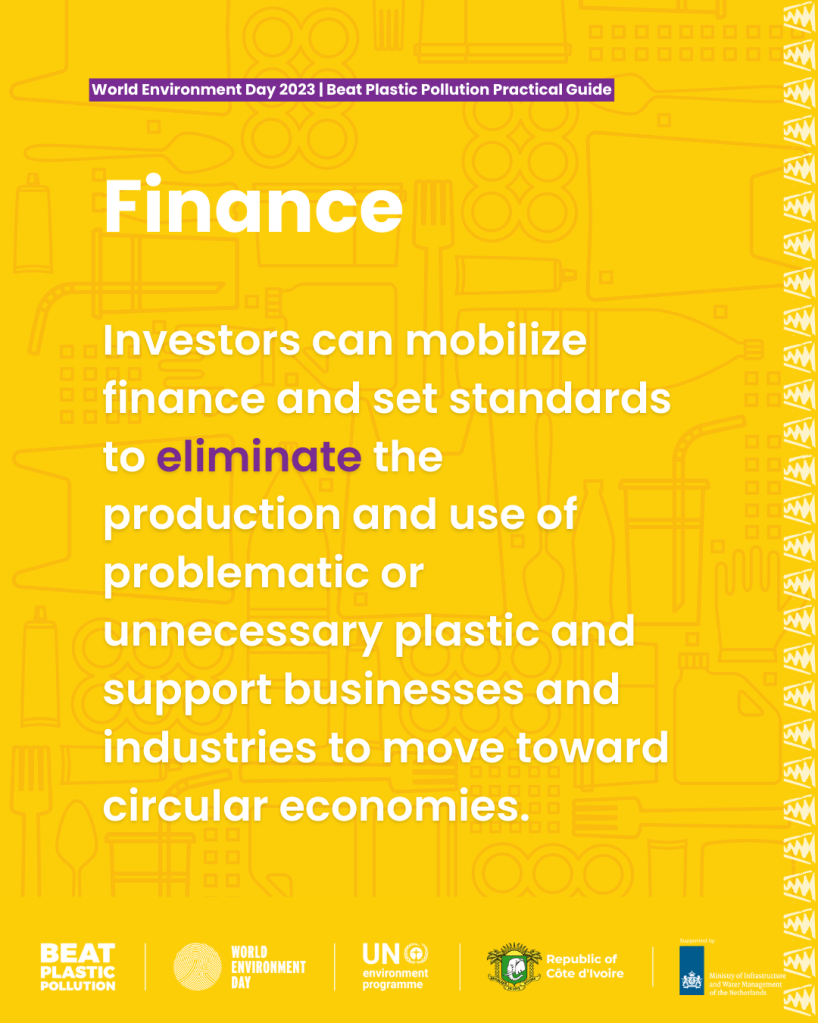
Finance
Investors can play a key role in mobilizing finance and setting standards for businesses and industries to move toward circular economies on plastics
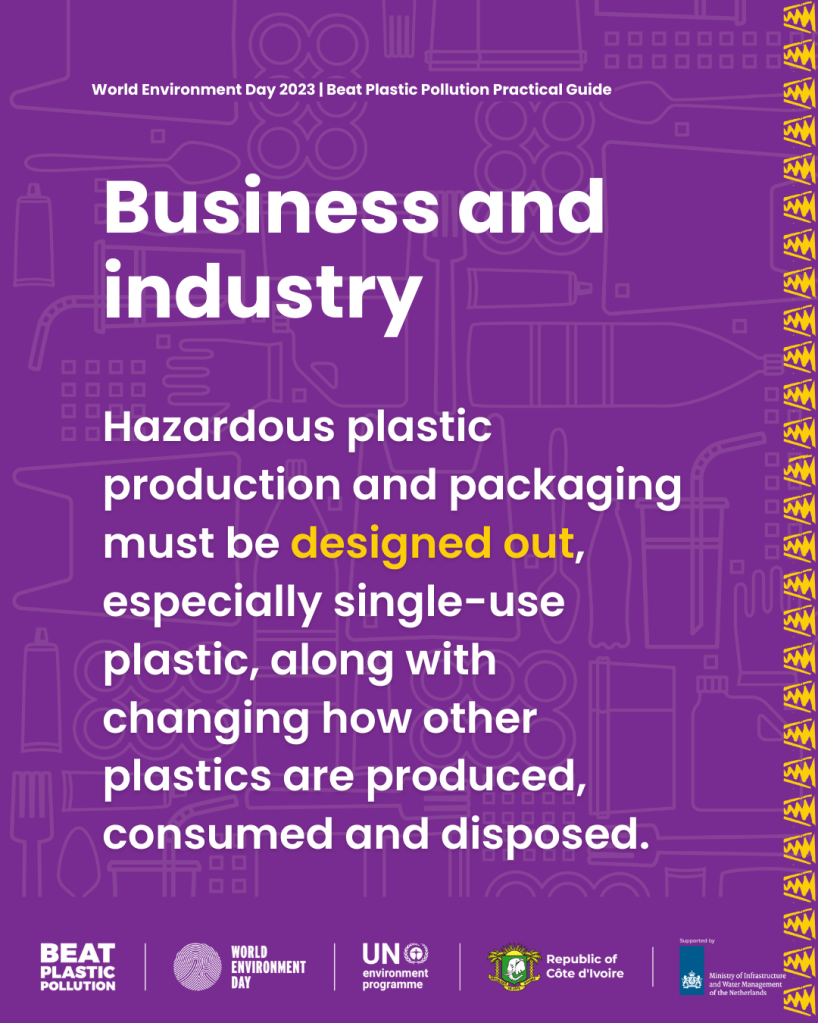
Business and industry
Given that 20 companies produce more than half of all single-use plastic in the world, a vital shift is needed in how businesses and industries produce, consume and dispose of plastic. There are several things businesses and industries can do to reduce plastic production and use.
![Where is all this plastic waste coming from and where does it end up? [Visual] | ecogreenlove](https://ecogreenlove.com/wp-content/uploads/2023/06/wed_beatplasticpoll.jpg "Where is all this plastic waste coming from and where does it end up? [Visual] | ecogreenlove")
PDF available to download from worldenvironmentday.global
How does plastic pollution affect us?
Biodiversity
An estimated 19 to 23 million tonnes of plastic leak into aquatic ecosystems annually. Plastic pollution has devastating effects on a wide array of organisms in our seas, rivers, and on land. Marine litter harms more than 800 species. More than 90 per cent of all birds and fish are believed to have plastic particles in their stomachs. The effects of microplastic ingestion are catastrophic; they cause starvation, endocrine disruption, stunted growth in some species and broken-down digestive systems. Plastic can prevent aquatic life from receiving oxygen and light, while microplastics can also accumulate in the soil due to their use in agricultural products.
Climate crisis
The production of plastic is one of the most energy-intensive manufacturing processes in the world, which is a problem when it comes to meeting the Paris Agreement goal of limiting the global temperature rise to 1.5°C. In 2019, plastic generated 1.8 billion metric tonnes of GHGs – 3.4 per cent of the global total – with 90 per cent of those emissions coming from plastic production and the conversion of fossil fuels. Most plastics originate from fossil fuels and the plastic industry accounts for 6 per cent of global oil consumption. The level of GHG emissions associated with the production, use and disposal of conventional fossil fuel-based plastics is forecast to grow to 19 per cent of global greenhouse gas emissions by 2040. This is particularly an issue with single-use plastics: 98 per cent of single-use plastic products are produced from fossil fuels or “virgin” feedstock.
Human health
Microplastics can enter the body through inhalation and absorption via the skin and accumulate in organs, including the placenta. Some of the chemicals in microplastics are associated with serious health impacts, especially in women. Scientists have established links between exposure from chemical additives that leech from plastics with obesity, diabetes, poor brain health and even cancer. Research is still being done on the effects microplastics have on human health, and we do not yet know the extent of how dangerous they are. Additionally, due to limited and inefficient waste management infrastructure, 40 per cent of the world’s garbage is burnt, 12 per cent of which consists of plastic. The burning of plastic waste has multiple health impacts, including increasing the risk of heart diseases and aggravating respiratory problems, such as asthma and emphysema.
What progress is being made?
More plastic waste is mismanaged than recycled and global projections for recycling remain low. Worldwide, 46 per cent of plastic waste is landfilled, 22 per cent becomes litter, 17 per cent is incinerated and 15 per cent is collected for recycling, with less than 9 per cent actually recycled after losses.
Are biodegradables the answer?
While much plastic is marketed as biodegradable, the reality is more complex.
Complete biodegradation of plastic occurs when none of the original polymer remains, a process that sees microbes break plastic down into carbon dioxide, methane and water molecules. The process is temperature dependent and some plastics labelled as ‘biodegradable’ require the conditions that typically occur in industrial composting units, with prolonged temperatures of above 50°C, to be completely broken down.
Such conditions are rarely if ever met in the environment. ‘Biodegradable’ plastics have additional drawbacks: they need to be separated from non-biodegradable waste during recycling to maintain the quality of the final product.
Evidence also suggests that if a product is labeled as “biodegradable,” people are more likely to throw it away as litter.
What more needs to be done?
Much more progress is needed, including reducing plastic production and consumption; transforming the whole value chain; efficient, transparent, and agile legislation, and more effective monitoring systems to identify plastic sources, scale and fate while shifting to circular approaches. There is no one solution, but many that must happen simultaneously and immediately.
Consumer pressure is key, but real action needs to come from companies, investors, lawmakers and governments.
Transitioning to circular approaches and plastic alternatives is critical. This involves a life-cycle approach – one where the impact of all the activities and outcomes associated with the production and consumption of plastic is considered. This includes reassessing raw material extraction and processing, and innovating manufacturing processes, product design, packaging, distribution and end-of-life management, such as segregation, collection, sorting, recycling and disposal. Addressing plastic pollution requires a systemic change, with actions across the life cycle that address its root causes rather than its symptoms.
This is a big challenge, but one that we must take on.
Source:
www.worldenvironmentday.global
![Plastic Pollution and its impact on the Oceans [Infographics]](https://ecogreenlove.com/wp-content/uploads/2019/06/06072019_plasticpollution.jpg?w=888)
![Plastic to avoid in everyday items [Visual]](https://ecogreenlove.com/wp-content/uploads/2019/10/10012019_plasticbiodegradation.jpg?w=888)
![Your Plastic is not being Recycled [Infographic]](https://ecogreenlove.com/wp-content/uploads/2019/06/06102019_plasticnotrecycled-1.jpg?w=888)
![Beauty & Hygiene Plastic-Free Swaps [Visual]](https://ecogreenlove.com/wp-content/uploads/2021/01/01182021_plasticfreeswaps-3.jpg?w=1200)


Join the ecogreenlove community

 ecogreenlove